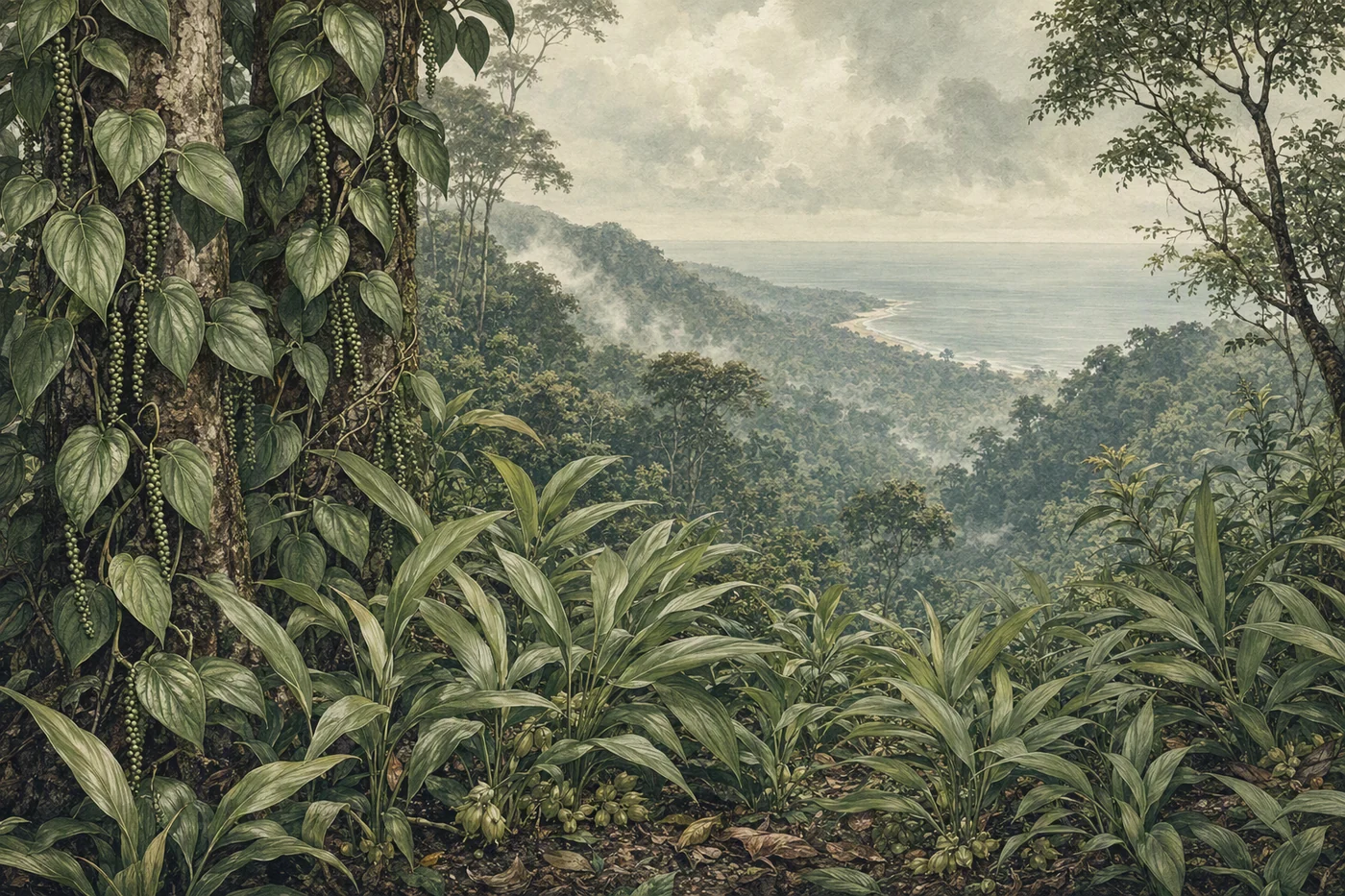
Botanical landscape illustration of the Western Ghats, pepper vines and Kerala’s Malabar coast

India · Kerala · The Malabar coast

A land shaped by rain.
A coast connected by spice.

An illustrated impression of Kerala’s spice landscape.

India’s land of spices. Kerala’s Malabar coast.

Pepper & cardamom.
From their original home.

India’s spice heritage spans a vast country. Ours begins in Kerala, on the historic Malabar coast of south-west India, and rises into the adjoining Western Ghats. Between the Arabian Sea and these rain-fed hills lies one of the ancient world’s great spice-trading regions.

Black pepper and small green cardamom are native to the Western Ghats. Here, sourcing connects your range to the landscape where these spices originated—and to farmers and traders who know the crops at home.

That is the Monsoon Grove advantage: authentic regional origin, local access and recent-harvest lots selected to reach you within six months of harvest.

Piper nigrum · Kurumulaku

The vine that travelled the world.

Black pepper is a climbing vine. Its spikes of berries grow along leafy stems, often trained on living supports. The Spices Board identifies the hills of the southern Western Ghats as its place of origin.

Today pepper is grown in many countries. Kerala remains part of the original growing landscape and of the vocabulary of the trade: Malabar, Tellicherry, garbled and bold.

Explore black pepper ↗

Elettaria cardamomum · Elam

A small pod from the shaded hills.

Small green cardamom is associated with the evergreen, shaded slopes of the Western Ghats. Its capsules grow on shoots near the base of the plant, beneath the long leaves.

Kerala’s high ranges form an important part of the southern Indian cardamom belt. What happens after harvest—curing, grading and storage—helps determine the colour, aroma and condition a buyer receives.

Explore green cardamom ↗
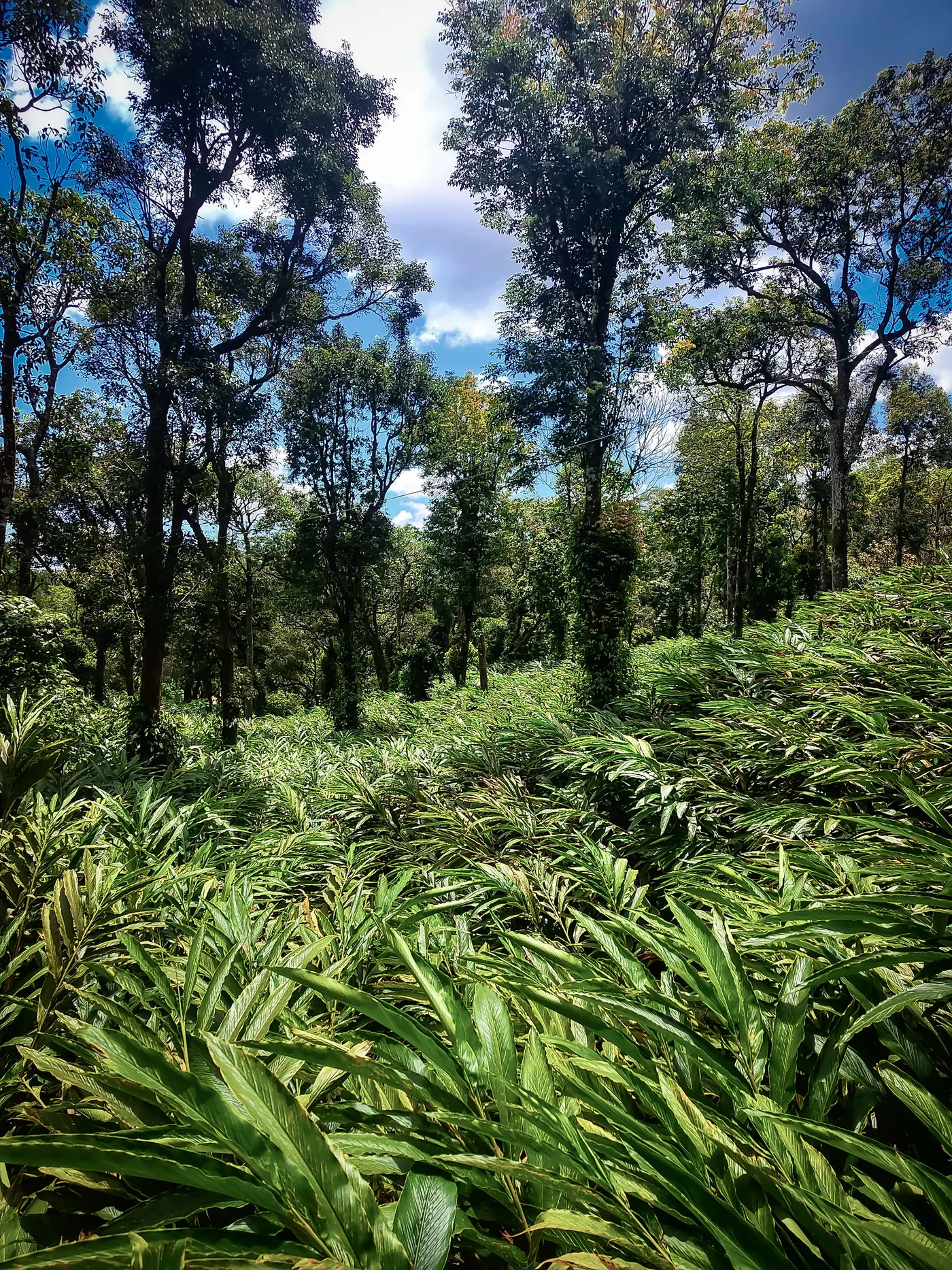
A cardamom plantation covering a hillside beneath tall shade trees in Idukki, Kerala
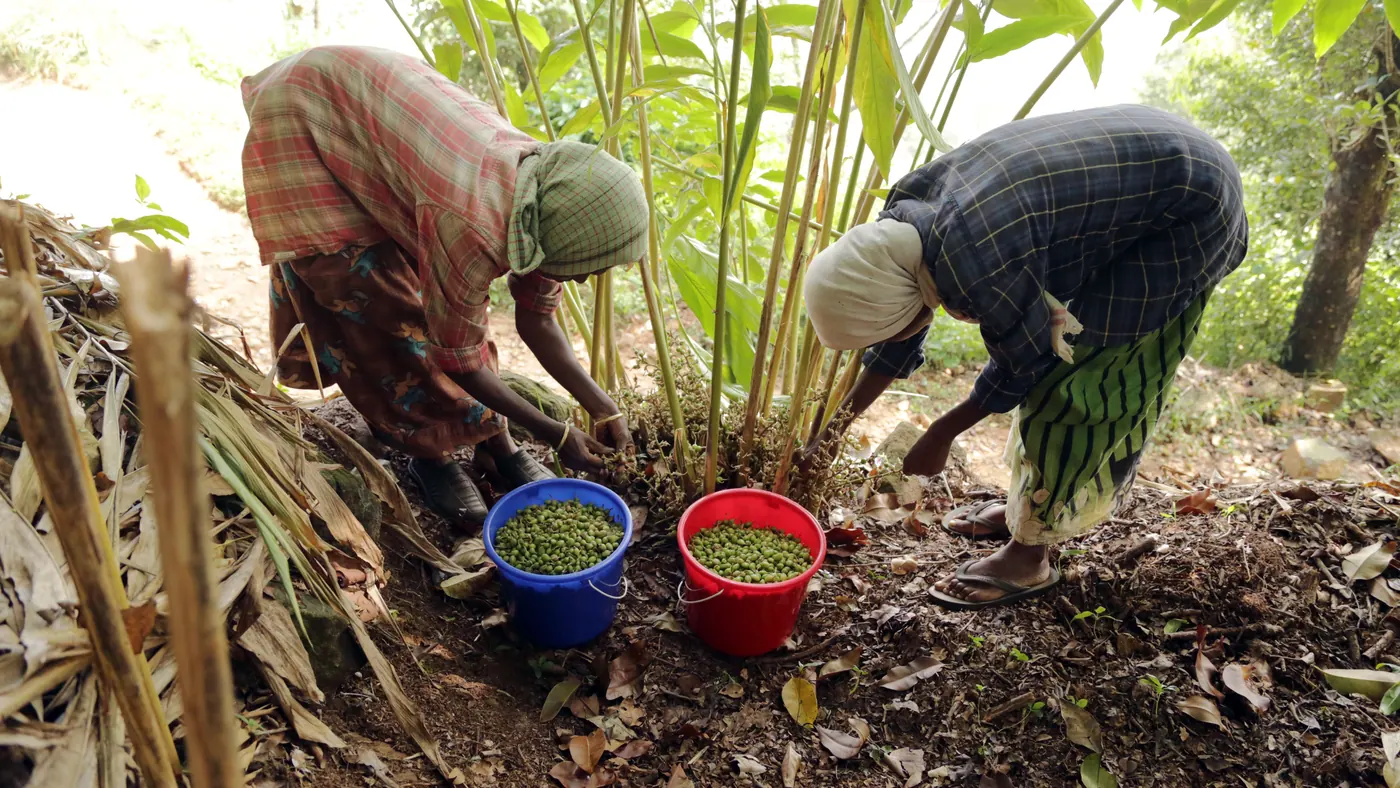
Two workers gathering cardamom at the base of the plants in a plantation in Wayanad, Kerala

Malabar · More than two millennia of exchange

The winds brought ships.
The spices brought them back.

The old accounts name this coast and its ports. Muchiri. Muziris. Tyndis. Nelcynda. Across languages and seas, the pepper country of present-day Kerala became a destination the ancient world knew by name.

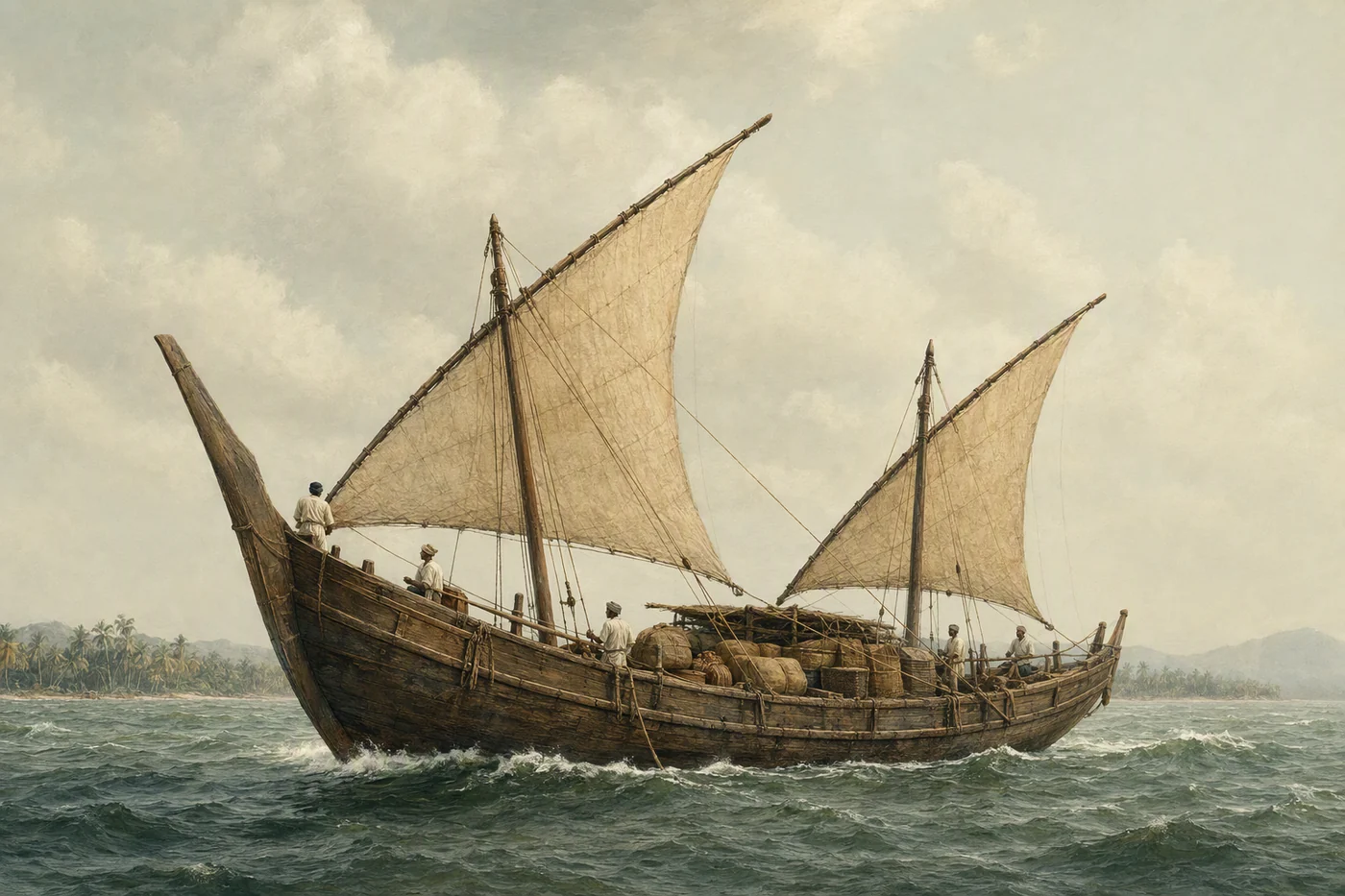
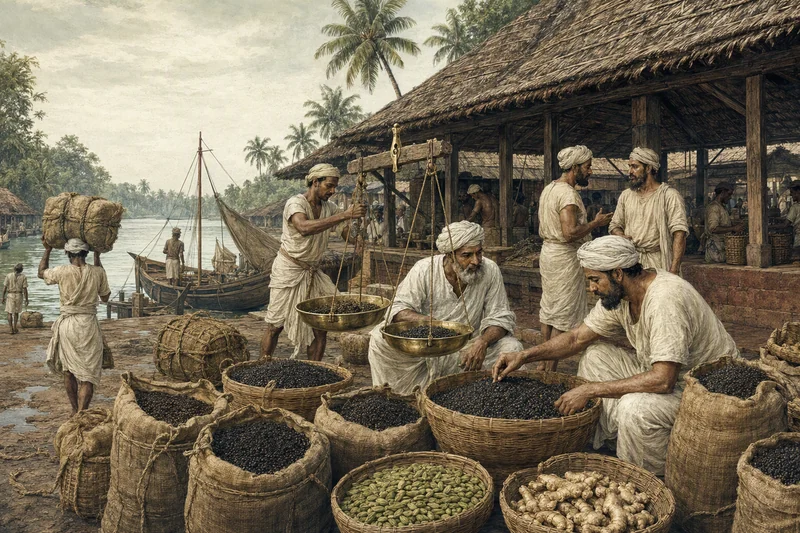
Artist’s impressions of the later medieval spice trade, continuing a much older story.

Early Tamil poetry · Chera country

Muchiri at home.
Muziris overseas.

Muchiri, also written Muciri, is the port known to Greek and Roman writers as Muziris. It belonged to Chera country, on the coast of present-day Kerala.

In the Akananuru, poem 149 evokes ships arriving with gold and departing with pepper. The Purananuru, poem 343, describes pepper sacks and the bustle of its riverbank trade.

1st century CE · The Periplus & Pliny

Ports named.
Pepper sought.

The Periplus of the Erythraean Sea, a merchant’s guide to the Indian Ocean, names Tyndis, Muziris and Nelcynda. It places the pepper-growing district of Cottonara near these markets.

Pliny’s Natural History, completed around 77 CE, also describes the voyage to Muziris. Seasonal monsoon winds connected the Malabar coast with the wider Indian Ocean trade.

2nd century CE · Ptolemy’s Geography

A place in the
world’s geography.

The Alexandrian geographer Claudius Ptolemy records Muziris as a trading centre in his Geography. These accounts place this particular coast within the commercial world of antiquity.

Across later centuries, Kozhikode and Kochi continued the story. Arab, Asian and European merchants kept returning to Malabar for the harvests of its hills.

“They send large ships to these market-towns on account of the great quantity and bulk of pepper…”
The Periplus of the Erythraean Sea, §56 · 1st century CE · W. H. Schoff translation
Read the early account

The people behind Monsoon Grove · Our Malabar connection

Close to the growers.
Connected to the trade.

Direct from farmers.
Connected through local traders.

Our connection is to this spice country: Kerala’s Malabar coast and the growing hills behind it. We can source directly through our farmer relationships, or find the right selection through our local trader network, supported by connections with exporters and auction participants.

Our experience comes from working in different capacities within the spice industry. It brings familiarity with the people, the growing regions and the distinctions that matter when a spice moves from a local market to an international buyer.

Within six months of harvest

Closer to the harvest.
Fresher on arrival.

Depending on the spice’s harvest season and lot availability, we can arrange recent-harvest lots to reach European buyers within six months of harvest. The harvest period and planned arrival window form part of the offer, alongside the grade, source and preparation.

Discover how we source

The landscape behind the ingredient

From India’s Malabar coast.
To your next collection.

Alongside its native pepper and cardamom, Kerala cultivates nutmeg—a crop originally from the Moluccas, whose kernels and delicate mace give us two distinctive spices. Together, they form a focused collection for buyers who care about origin, character and the people behind the ingredient.

A good supply relationship starts here

Bring this origin to your range.

Explore our premium selections and request current grade, sample and supply details.

Discuss your requirements